


As Israel marks Holocaust Remembrance Day, antisemitism remains a global threat, showing no signs of fading. Troubling data collected over the past decade paints a grim picture: 39 Jews have been murdered abroad because of their identity, alongside millions of antisemitic social media posts, thousands of violent incidents and antisemitic rhetoric that has increasingly entered mainstream discourse.
“Every year we think we’ve reached a new peak in antisemitism, and every time reality surprises us with levels we haven’t seen since World War II,” says Dr. Raheli Baratz, head of the Department for Combating Antisemitism at the World Zionist Organization.
7 View gallery

'Jihad is the only solution': Anti-Israel protester in Pakistan
(Photo: Aamir Qureshi / AFP)
“The hate that spreads across social media is once again crossing into the physical realm. Antisemitism keeps changing form and face, but the hatred remains the same, deeply rooted in society. Geopolitical shifts around the world are fueling it—and it doesn’t take much to hate Jews. Every global crisis creates a new source for that hatred,” she adds.
The year 2014 marked a turning point in the trajectory of modern antisemitism. With the outbreak of Operation Protective Edge in the Gaza Strip that summer, antisemitic incidents spiked sharply around the world.
Attack on the rabbi of Orléans in France
(Video: From social networks)


In several European countries, incidents rose by as much as 400% compared to the same period the year before. In France, for example, eight synagogues were attacked in a single week, along with widespread vandalism and calls for the murder of Jews in the streets. During protests against Israel, chants of “Death to the Jews” were heard—not just “Death to Israel”—highlighting the blurring line between anti-Israel sentiment and outright antisemitism.
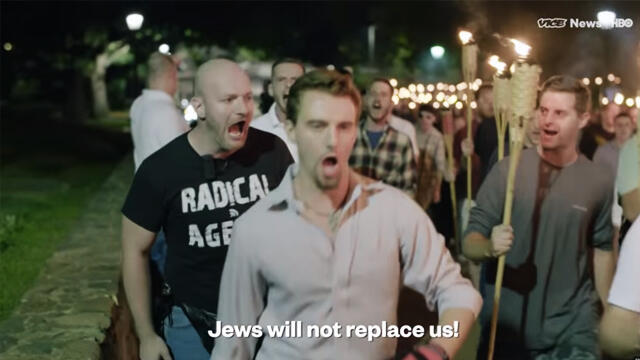
According to data from the World Zionist Organization’s Department for Combating Antisemitism, the situation continued to deteriorate in 2016, as antisemitic discourse began infiltrating the mainstream. This included rhetoric from politicians in Western Europe, the American alt-right and segments of the radical left that cloaked antisemitism in criticism of Israel.
In the United States, the presidential campaign triggered a surge in antisemitic content, with 2.6 million antisemitic posts shared on the social platform X during the election cycle. That same year, antisemitic incidents on U.S. college campuses rose by 45% compared to 2015—a trend that has worsened in the years since.
7 View gallery

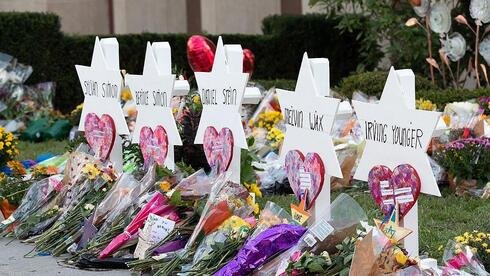
11 Jeiwsh worshippers wre killed in the shooting at the Tree of Life synagogue
(Official White House Photo by Andrea Hanks)
The year 2020 brought a shift with the outbreak of the COVID-19 pandemic. For the first time in years, there were no Jewish fatalities from antisemitic attacks, largely due to lockdowns and restricted movement. However, antisemitism did not disappear—it transformed, moving from physical spaces to the digital realm.
7 View gallery

Antisemitic posters during the COVID-19 pandemic
(Photo: Center for the Study of European Jewry)
In 2021, despite no recorded antisemitic murders worldwide, the number of reported incidents rose significantly. Operation Guardian of the Walls in May of that year triggered a wave of antisemitism across the globe. The United Kingdom saw 639 incidents in May alone—a record monthly figure—while Canada reported more antisemitic events in that month than in all of 2020.

Between May 7 and May 17, 2021, approximately 250,000 antisemitic posts were recorded online, representing a 200% spike from the previous month. The period also saw a marked rise in comparisons between Israel and Nazi Germany, a phenomenon known as the “Nazification of Israel.”
In 2022, there was a slight decline in the overall number of antisemitic incidents globally, but violent cases—including physical assaults and acts of vandalism—increased by 13%. At the same time, openly antisemitic rhetoric increasingly entered the mainstream, fueled by celebrities, politicians and public campaigns across the United States.
The outbreak of the Israel-Hamas war—Operation Iron Swords—following the October 7, 2023 terror attack, sparked another unprecedented spike in global antisemitism. Online antisemitic discourse rose by 400%, with a 1,200% increase in antisemitic social media posts.
7 View gallery

Swastika and antisemitic epithets on the walls of a synagogue in Sydney
(Photo: From social networks)
Antisemitic incidents in 2023 were geographically widespread, reflecting an alarming global trend.
In 2024, the situation worsened, with a 340% increase in global antisemitic activity compared to 2022 and a 100% rise over 2023. In the United States alone, antisemitic incidents surged by 288%; France saw a 350% increase, Canada 562% and Australia 387%.
Reports from the past year indicate a continued rise in antisemitic acts, both physical and digital. The year 2025 began at a record high in reported incidents, with Jewish communities worldwide increasingly reporting threats. Countries like Canada and Australia—once seen as safe havens—now experience daily antisemitic events, many of which go unreported or unaddressed. Jewish communities are responding by ramping up security around synagogues, schools and other sensitive sites.
7 View gallery

A pro-Palestinian protester in New York holds a sign calling for violent resistance
(Photo: Angela Weiss / AFP)
Over the past decade, antisemitism has transformed—from a fringe issue to a mainstream threat, from physical spaces to digital platforms, and from Europe to nearly every corner of the globe. The toll includes 39 Jews murdered for their identity, millions of online hate posts and a growing sense of insecurity among Jewish communities.
“It is especially troubling to see how socially accepted antisemitism has become under the guise of ‘political criticism,’” said Baratz. “University campuses are turning hostile toward Jewish students, and antisemitic conspiracy theories are spreading unchecked online. This is not just a Jewish issue—it’s a battle for the values of democratic society. ‘Never again’ is not a slogan for the past. It’s a call to action now.”
