


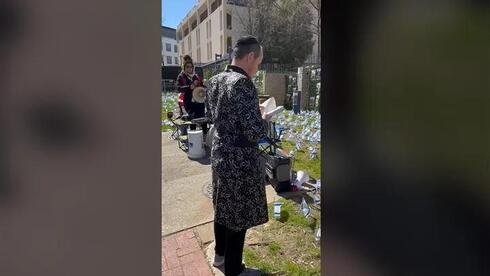
Rabbi Shmuel Herzfeld praying for the release of the hostages outside the Israeli Embassy in Washington has he is being harassed by pro-Palestinian protesters
(Video: Bethany S. Mandel)


According to Herzfeld’s testimony, the moment he began praying aloud, Barmada—wearing headphones and using a megaphone—shouted, “It’s time for the sirens,” prompting the group to activate piercing alarms. He filed suit, claiming the noise caused hearing loss. The activists responded with a counter-lawsuit, accusing him of stalking and harassment. A temporary restraining order was issued against Herzfeld, which he said caused embarrassment to him and his family.
"It was Shabbos, my parents were over, and my children were there, and I come home from prayers. And my wife was, you know, horrified that police had – she said police came to our door and they left and they – and they gave me, you know, this temporary restraining order," Herzfeld recounted in court. He added that one of the hardest parts was the fear his neighbors might believe the allegations.
"I was reciting Psalm 121 to myself, ‘I lift up my eyes to the mountains from where will come my help.’ I was reciting Pslm 132 [sic] to myself from the depths to – you know, to God as a prayer – ‘From the depths I call out to you, Please, God, answer me,’" he added.
During the three-day hearing, Herzfeld maintained that he had only encountered the activists on three occasions—twice with Rokhvand present—and never sought to contact or threaten them. The judge concluded that there was no evidence to support the harassment claims.
“The evidence suggests that his presence on those occasions was not an attempt to locate Petitioners or any other particular individuals; he was going to the embassy to pray, observe the protests and at times (March 21 and May 2) make his own comments regarding the protests," the judge wrote in his ruling, noting both parties’ actions were protected under the right to free speech.

Attorney Greg Lipper, representing the defendants, said he would appeal, claiming that the ruling arose from "serious errors of law, fact, and procedure." He argued the women sought protection through the legal system and were now being punished. “It's an especially bad time to discourage people from asking the court for help, given spikes in threats and violence against (among others) women, Muslims, and advocates for civil and human rights.”
