


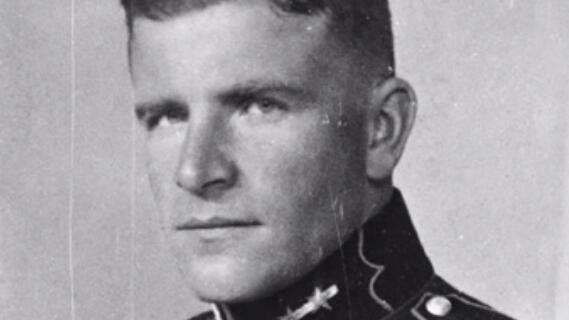
Rabbi Pinchas Goldschmidt, President of the Conference of European Rabbis, expressed his outrage over the decision, stating, "We are appalled by the Latvian prosecution's decision to close the case against Herberts Cukurs. This decision allows a cruel figure like the 'Butcher of Riga' to be exonerated. This distortion of history, in which a state clears the name of a Holocaust murderer, raises deep concern."
Goldschmidt continued, "Justice and historical truth must not be manipulated for populist goals or used as tools to glorify a mass murderer as a hero. We are witnessing a disturbing trend of the revival of past ideologies, with the rise of extreme nationalism in parts of Europe."
The prosecution’s decision comes amid a troubling rise in extreme nationalism and antisemitism in parts of Europe. Cukurs, who has gained a following among extremist groups in Latvia, is now feared to be elevated as a national hero. There is growing concern that this could lead to pressure for a state-sponsored funeral and ceremony honoring him in his home country.
Cukurs, born in 1900, became a national hero in Latvia during the 1930s after flying a self-built plane from Lithuania to Gambia. With the rise of Adolf Hitler in Germany, the Latvian ultranationalist party Pērkonkrusts ("Thunder Cross") emerged, blending elements of German nationalism and Italian Fascism. While initially opposed to Nazism, the party’s ideology was rooted in antisemitism and Cukurs quickly rose to prominence within its ranks, serving as an assistant to the party leader, Gustavs Celmiņš.
When Nazi forces occupied Latvia, Cukurs became deeply involved in the extermination of the Jewish population. Eyewitnesses report that Cukurs personally executed numerous victims, including the mass shooting of 500 Jews on November 30, 1941, before they were led to the woods for further executions.
After the Soviet occupation of Latvia, Cukurs fled with the German forces and later lived in Berlin. Following the defeat of the Nazis, he escaped to France, where he was granted a political refugee travel document by the Brazilian consul in Marseilles, eventually making his way to South America. In Brazil, he married and had a son.
Cukurs' body was found in March 1965 in a box in a house on Cartagena Street in Montevideo, Uruguay. A note attached to the body detailed the crimes he committed in Latvia and was signed by an organization called "We Will Never Forget."
