


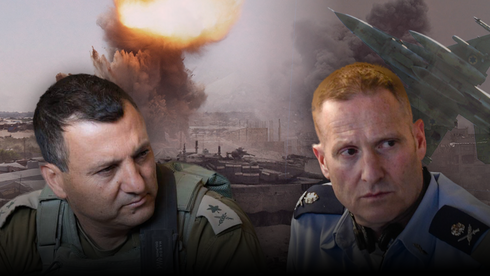
A senior defense official warned that without swift intervention, the friction could escalate into a full-fledged crisis of trust between Southern Command and the Air Force. The core issue, officials say, revolves around what the IDF terms “nezah agavi” — collateral damage — a euphemism for the deaths of uninvolved civilians in the course of airstrikes targeting Hamas and other terrorists in the enclave.
Target approvals are typically made overnight ahead of the following day’s strikes, in a process led by Asor. This includes setting priorities and coordinating munitions use through the Fire Center — the nerve center of all strike operations, whether ground-based, artillery or aerial.
However, in recent weeks, senior figures in the Air Force have grown increasingly uneasy. Part of that discontent stems from the rising number of civilians killed in Gaza since the IDF resumed intensive operations in the territory. Tensions have reached the point where, as of this week, Air Force chief Bar now personally approves each individual strike carried out by his branch.
In practice, pilots are increasingly finding discrepancies between the estimates they are given before a strike and the actual civilian death toll afterward. For example, on a recent Saturday, Palestinian authorities reported 52 deaths in Gaza by the evening. When Air Force officials attempt to investigate such cases, they say they are often met with insufficient cooperation — a charge they direct at other parts of the military.
While the IDF insists that cooperation between Southern Command and the Air Force continues around the clock and remains effective, sources in the Air Force say the deeper issue lies in how information is managed before and after a strike. “All of the targets are legitimate,” one senior Air Force officer said. “The question is the intelligence that leads us there — and what’s done with the results.”
Mistakes are inevitable in combat, they acknowledge. But when investigations into those mistakes are not thorough, or when similar incidents recur, it raises red flags. “It starts to look like someone has a finger on the trigger without enough professionalism,” one Air Force figure said. “That perhaps this isn’t just a mistake.”
Some question why the Air Force is raising concerns now, more than 18 months into a war that has already resulted in thousands of civilian deaths in Gaza. Officers within the Air Force and Military Intelligence say the nature of the war has changed. They point to a decline in high-value targets and a shift in tone since Asor assumed command of Southern Command.
Asor is widely seen as a bold, aggressive commander aligned with the prevailing IDF strategy of seeking “total victory” over Hamas. He holds the authority to impose conditions on target approval and to halt or authorize strikes in real time — including during active combat. Sources say recent operations have been more aggressive, with less consideration given to the risk of civilian casualties, without a measurable improvement in battlefield outcomes.
Earlier this year, a group of reserve pilots signed a petition questioning the ethical direction of the war. Bar responded sharply, declaring that the signatories would no longer serve in operational positions — though they were not fully discharged from reserve service. The episode exposed deeper unease within the Air Force, which continues to prepare for the possibility of a large-scale strike on Iran’s nuclear program.
Unlike some other militaries, the Israeli Air Force operates on a hybrid model of career personnel and reservists, many of whom bring extensive operational experience. Senior officers warn that any suggestion to simply “follow orders” without questioning intent or outcome fails to grasp how Israeli squadrons operate. “This isn’t the Russian Air Force,” one said. “The IDF isn’t a mercenary army.”
Their main concern now is what happens if, or when, pilots are ordered to implement one of two classified operational plans for a full-scale ground invasion of Gaza — moves that could carry serious implications for the fate of Israeli hostages.
IDF Response: “All IDF branches operate in full coordination and with a shared purpose to achieve the objectives of the war,” the IDF Spokesperson’s Unit said in a statement. “Debriefing, lessons learned and operational review processes are conducted routinely. The IDF is taking ongoing steps to reduce harm to uninvolved civilians despite the challenges posed by terror infrastructure embedded within civilian areas.”
