



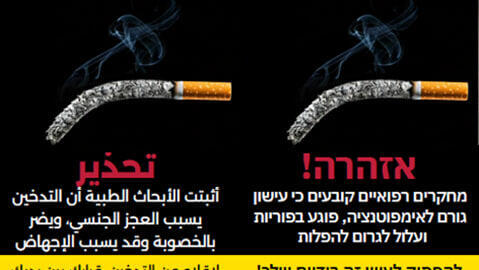
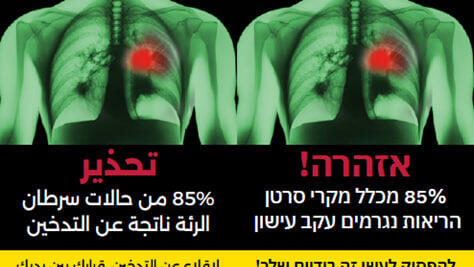
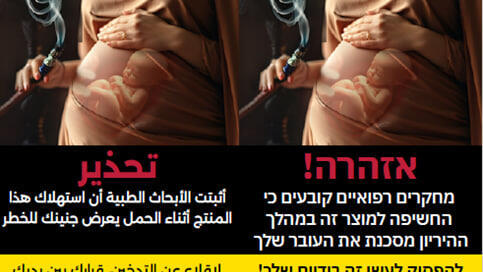
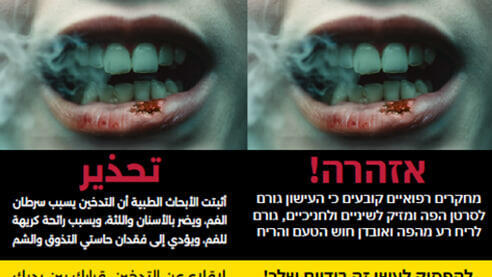
The regulations, published Thursday, will be open for public comment for three weeks before being submitted for final approval by the Knesset. Once approved, the rules are expected to take effect within a year. Importers and distributors will be required to rotate the warning images annually to prevent the public from becoming desensitized.
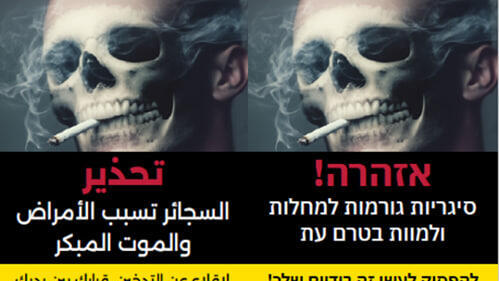
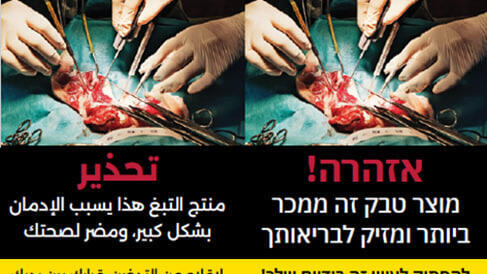
“Smoking is one of the most severe public health threats and a leading cause of preventable illness and death,” he added.
“The ministry is taking significant measures to curb this trend, including increasing taxes on all tobacco products and launching public awareness campaigns. The new warning labels align Israel with global standards in the fight against smoking."
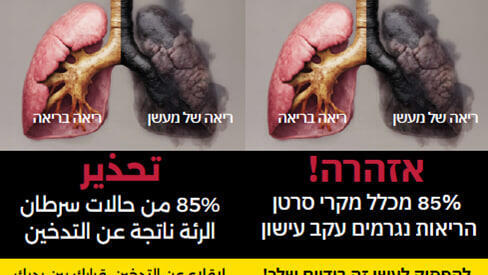

Dr. Sharon Levy, head of the ministry's health education and promotion department, stressed that Israel is among the first countries to introduce such measures. "There is a lack of awareness about the dangers of electronic cigarettes, with many believing they are significantly less harmful.
“Research shows that teenagers who use e-cigarettes are four times more likely to start smoking traditional cigarettes. We also see children as young as 12 experimenting with vaping."
Levy explained that the images were carefully selected to balance their deterrent effect without being excessively distressing, especially given the ongoing war in Gaza. "We consulted with various communities, including the Arab and ultra-Orthodox sectors, as well as youth organizations.
“The goal was to highlight smoking-related dangers while avoiding overly traumatic imagery. The warnings will also include a national quitline and information on cessation programs available through health funds."

The number of fines issued for smoking violations also plummeted, from 10,115 in 2022 to just 3,864 in 2023. The ministry said it plans to strengthen enforcement in collaboration with local authorities.
“We have not engaged with industry lobbyists but we did consult the ultra-Orthodox sector to ensure the images are appropriate. I expect tobacco companies to resist because they know this will hurt sales — and that's exactly what we want."

Alroy-Preis noted that smoking causes 8,000 deaths annually in Israel, with 10% resulting from secondhand smoke exposure. The new warnings are part of a broader initiative, including stricter enforcement and a planned ban on flavored e-cigarettes.
A national task force was established in 2023 following the death of 16-year-old teenager Meidan Keller from e-cigarette use and the hospitalization of another minor.
The ministry is also monitoring a potential rise in smoking due to the ongoing war. "Smoking was already a major concern but the stress and hardship caused by the war make it even more pressing. We expect to see an increase in smoking rates, especially among e-cigarette users," Alroy-Preis said.
On secondhand smoke, she acknowledged concerns about smoking on balconies but noted that regulation falls under Israel's Clean Air Law, managed by the Environmental Protection Ministry. "We're exploring ways to minimize exposure to secondhand smoke, but ultimately, a person's balcony is part of their home and not considered a public space under the law."
