


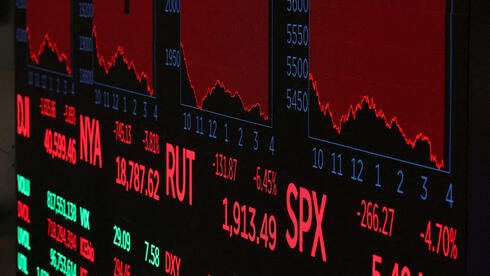
The tech community has largely remained silent publicly. But privately, many industry figures are voicing concern over a dual threat: interruptions to global supply chains and the looming risk of a consumer slowdown, which could harm giants like Amazon.
Limited direct impact on Israel, but broader risks loom
The direct effect on Israel’s high-tech exports appears limited. Most Israeli tech output consists of software, which is classified as a service and therefore exempt from tariffs. The chip sector, dominated by Intel’s operations in Israel, is also currently unaffected.
“Most of the chips exported from Israel go first to the Far East, not the U.S., so the tariffs don’t apply,” said Dr. Assaf Patir, chief economist at the RISE Israel Institute. “The only vulnerable sector is medical and measuring equipment, which accounts for about $2 billion annually—but I expect political pressure will eventually lead to an exemption.”
Still, Israeli companies are feeling the effects of market uncertainty. Nayax, which manufactures payment systems for vending machines, publicly reassured customers that it would not raise prices. “While the new tariffs are out of our control, our pricing isn’t,” the company said in a statement. “In uncertain times, it’s important to stand by our customers and support their growth.”
Patir warned that the greatest threat to Israel’s tech exports could come from a broader global downturn. “Trump’s move is as impactful as the Smoot-Hawley Tariff Act under President Hoover in 1930, which slashed global trade by 25%,” he said. “Back then, global trade was 14% of GDP—today it’s 60%. The depth of the recession will depend on how quickly the U.S. walks this back.”
U.S. incorporation trend gains steam
While the 17% tariffs on Israeli goods have not had a widespread effect, experts say the symbolism of Israel’s exclusion from exemptions could further drive Israeli startups to incorporate in the U.S.
“This gives Israeli startups one more reason to incorporate in the U.S., a trend already accelerating since the judicial overhaul,” said Guy Preminger, senior partner and head of tech at PwC Israel. “Even if the tariff drops to 10%, the fact that Israel wasn’t exempt from the plan will stick.”
Preminger noted that incorporation decisions also affect how Israeli companies are perceived by U.S. partners. “The administration’s rhetoric seeps in. American companies will prefer buying from American firms. Israeli manufacturers are starting to internalize that, and it may affect where they choose to build factories or production lines.”
He added that Trump may already be achieving his stated aim of bringing production back to the U.S. “This kind of uncertainty causes projects and factory openings to be paused. Investors, having taken losses, will naturally shy away from new commitments to startups and venture capital.”
Eyes on Europe
As U.S. market volatility intensifies, some Israeli firms are beginning to look to Europe. The continent offers a similarly sized consumer base, though fragmented by language and regulation. Historically, European buyers have favored established American firms over lesser-known Israeli startups.
“Trump’s policy has rattled Europe and may push buyers toward Israeli products, which already enjoy a strong reputation,” said Yair Kuznitsov, co-founder and CEO of Anecdotes, a company that develops regulatory workflow tools. He sees a rare opportunity for Israeli firms to expand in Europe—“a muscle we haven’t really exercised.”
The long-term effects of Trump’s tariff strategy remain uncertain, but the immediate impact is clear: global tech is on edge, and Israeli firms are recalibrating for a more unpredictable economic landscape.
