


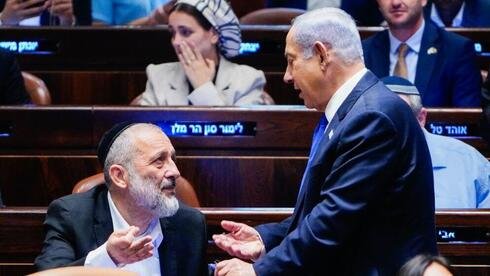
The crisis was long in the making, and all the key players—representatives of the Haredi parties and Knesset Foreign Affairs and Defense Committee Chair Yuli Edelstein—entered the political minefield standing firm in their positions.
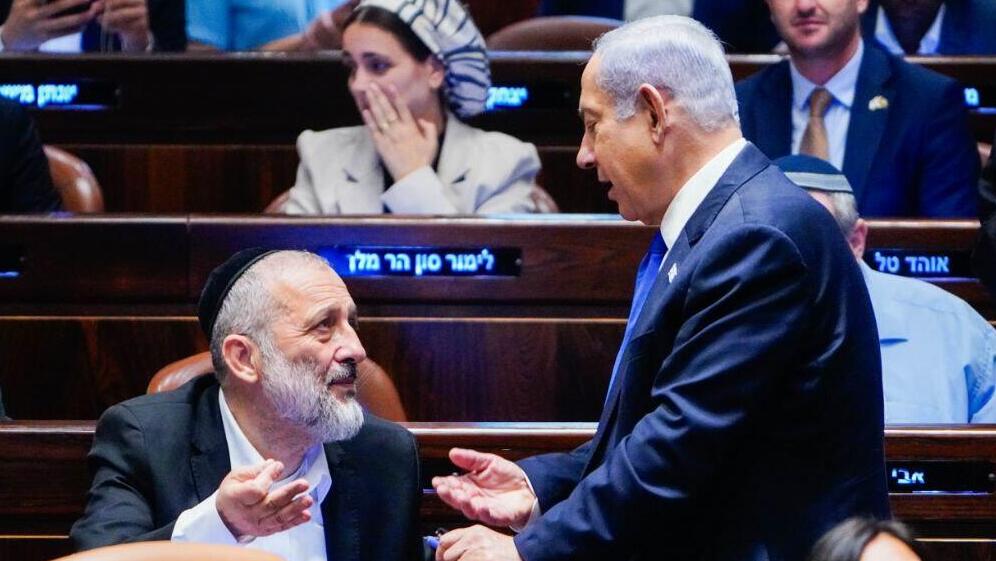
Haredi lawmakers’ frustration with the government and the coalition has reached a boiling point after nearly two years of simmering resentment. They believe the exemption could have been legislated relatively easily at the beginning of the term, not for the launch of the judicial overhaul, which ignited fierce opposition both in the Knesset and in the streets. Now, they face Edelstein, backed by reservist advocacy groups and their families, as well as a public sentiment, strong even among the right, hardened further since October 7.
It’s worth recalling that Edelstein opposed Netanyahu before the last election, and in return was humiliatingly demoted afterward—passed over for a senior ministerial role and instead appointed committee chair. In an ironic twist, he now holds the key to Netanyahu’s government at its most sensitive pressure point.
Still, Edelstein is not alone. Both he and the Haredi lawmakers who met with him Tuesday for what was meant to be a compromise-seeking discussion harbor deep resentment toward Netanyahu. The prime minister is well aware of this and is now engaged in a containment battle on two fronts.
The first is the substantive crisis itself, which has triggered a series of threats from Haredi rabbis and politicians aimed at bringing down the government. The second is more procedural: the looming possibility that the Knesset will be formally dissolved. Such a move could begin as early as next week—if the opposition introduces a bill to that effect.
But a dissolution bill must pass through all stages of the legislative process, from preliminary reading to final approval, creating a window of time during which tensions might ease. For now, Netanyahu—who retains the support of Shas leader Aryeh Deri—is relying on a familiar strategy: buy time and survive. It’s the same approach he’s used in managing the war, the hostages, and his criminal trial.
His first goal is to make it through the relatively short summer session and reach the recess. Beyond that, toward the winter session, he’ll leave it in God’s hands.
One question continues to trouble observers of the crisisWhatat exactly do the Haredi parties expect to gain on the other side of a Knesset dissolution? The chances of securing a draft exemption law from Yair Lapid or Benny Gantz—let alone Avigdor Lieberman or Yair Golan—are slim to none. So what’s the plan? Reenter coalition negotiations after the next election with the same law, the same Netanyahu, and the same lineup?
A senior Haredi official offered a grim—if poetic—description of the situation today: “It’s becoming impossible to remain in a government where young Haredim could end up with fewer rights than Nukhba terrorists. The atmosphere toward us is hostile, and the discourse humiliating. Sometimes, all you can do is take the leap and say to the Holy One, blessed be He: ‘Take it from here and lead us to the right place.’”
