


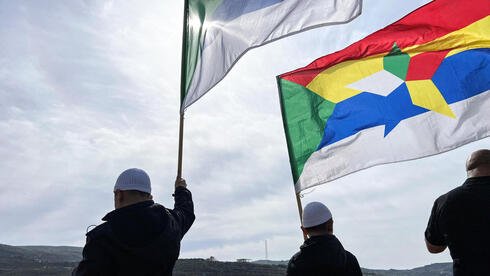
In Israel, the Druze have integrated into society, serving in the military, government and various professional fields, balancing their cultural heritage with their national identity.
“From the time of Israel’s establishment, the Druze have been part of the country. We serve and contribute at every level of government, including the army. The Druze have served in the military since the state's founding, taking an active and central role in security and civil affairs. Overall, the Druze are well-integrated within Israel.”
Eyal Ganim, an entrepreneur and former Israeli security officer, sheds light on the community’s sense of identity. “First of all, we are Druze. Despite differences tied to geography and personal perspective, our core remains unchanged. We are Druze by faith, Arab by culture and Israeli by nationality. We are not interested in our own state; we are committed to our land and will protect it at any cost. That is why serving in the Israeli military is not just an obligation—it is a commitment.”
3 View gallery

Over 100 Syrian Druze religious leaders visit the Tomb of Prophet Jethro in northern Israel
(Photo: REUTERS/Avi Ohayon)
He further highlights the Druze's role as bridge-builders. “Our community always builds bridges, not walls. While the Druze in the Galilee see themselves as Israeli Druze, those in the Golan and other regions feel differently. But we all share a core identity.”
The recent conflicts in Gaza have brought new challenges for Israel’s Druze community. Many serve in the military and have firsthand experience of the conflict. “As Druze, we feel the conflict from both sides,” says Eyal Ganim.
With Syria in turmoil, discussions about a potential Druze state have resurfaced. While some advocate for an independent Druze homeland, many community leaders remain skeptical. “I don’t think there will be a Druze state,” says Col. (Res.) Hamada Ganim. “The Druze in Syria should stay loyal to their country if it protects them. If not, they must take control of their situation and defend themselves.”
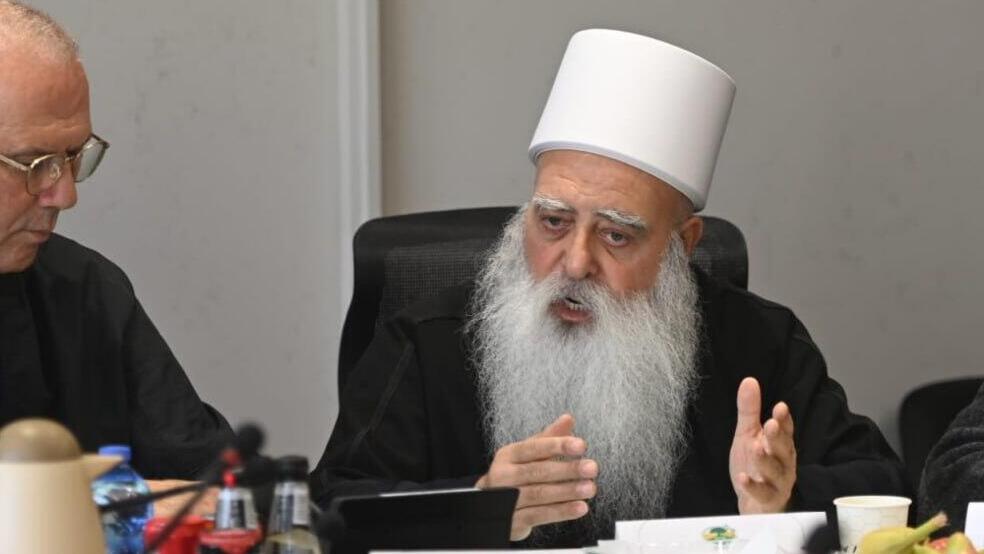
Eyal Ganim echoes this sentiment, explaining how the Druze identity is shaped by the country they live in. “We belong to our respective nations, but Druze unity transcends borders. In Syria, Lebanon and Israel, we see ourselves as one people. However, politically and geographically, we differ, making it hard to speak for the entire community.”
The massacre of Alawites in Syria has raised fears of similar violence against the Druze. Reports suggest that Israel has offered assistance, but the response within the Druze community has been mixed. Some accept the aid, while others are wary of the political consequences. “I don’t think a Druze state is the answer,” says Khiraldin. “The Druze should not separate from Syria. I hope for long-term stability, but in the meantime, Israel must support them when needed.”
Col. (Res.) Hamada Ganim warns of the deteriorating situation. “Syria is in a dangerous place. The fall of Bashar Assad leaves uncertainty. We’ve seen the horrors in Latakia and Tartus. We hope the same fate does not befall the Druze. Minorities—Druze, Alawites and Christians—must protect themselves.”
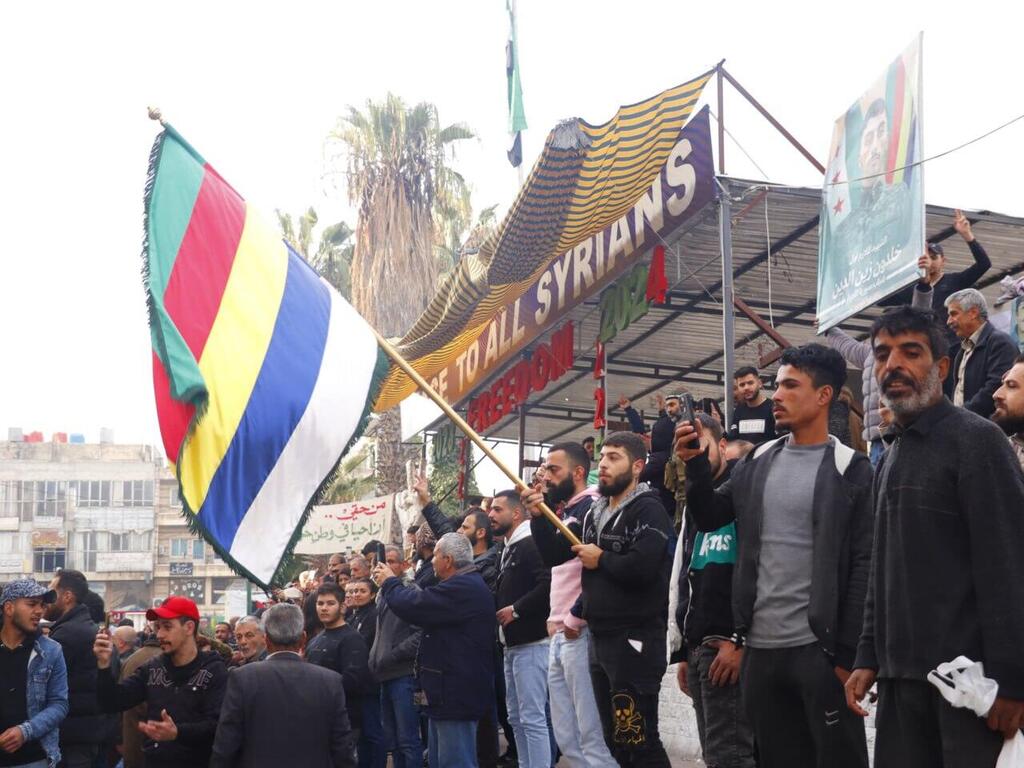
Beyond the challenges of conflict, communities in northern Israel continue to coexist. In Migdal, near Maghar and Tiberias, Tannourine Restaurant is a testament to interfaith harmony. Its owner, Hani Hana, reflects on the restaurant’s founding. “My brother and I started this place with our mother 24 years ago. We wanted a space where Jews, Muslims, Druze and Christians could gather. Today, we see that vision come to life.”
Hana highlights the difficulties Christians face in the region. “In Israel, we have stability, but we struggle for representation. Our numbers are shrinking, and across the Middle East, our existence is threatened.” He believes that political leadership has failed to foster unity. “The Middle East’s struggles are not about people—they’re about politics. Ordinary people want peace. If leaders focused on unity, everything would change."
In Migdal, architect Matti Avahalomov is working on a project that embodies the region’s diversity—the transformation of the Migdal Beach Promenade. “The promenade will physically represent coexistence, incorporating Jewish, Christian and Islamic architectural elements to create a shared cultural space,” he explains.
Avahalomov believes in the power of architecture to unite communities. “People see a divide between Jews and Arabs, Israelis and Palestinians. But coexistence is real. We are building a future that embraces shared history and identity.” He emphasizes the role of public spaces in fostering dialogue. “Architecture is more than just buildings—it is about identity. When we design spaces that bring different communities together, we create opportunities for understanding.”
From Maghar to Tiberias, the voices of Israel’s Druze and Christian communities share a common theme: unity. Despite the conflicts that have defined the region, they have chosen coexistence. Their message is clear—peace is not just an aspiration but a choice.
