


2 View gallery
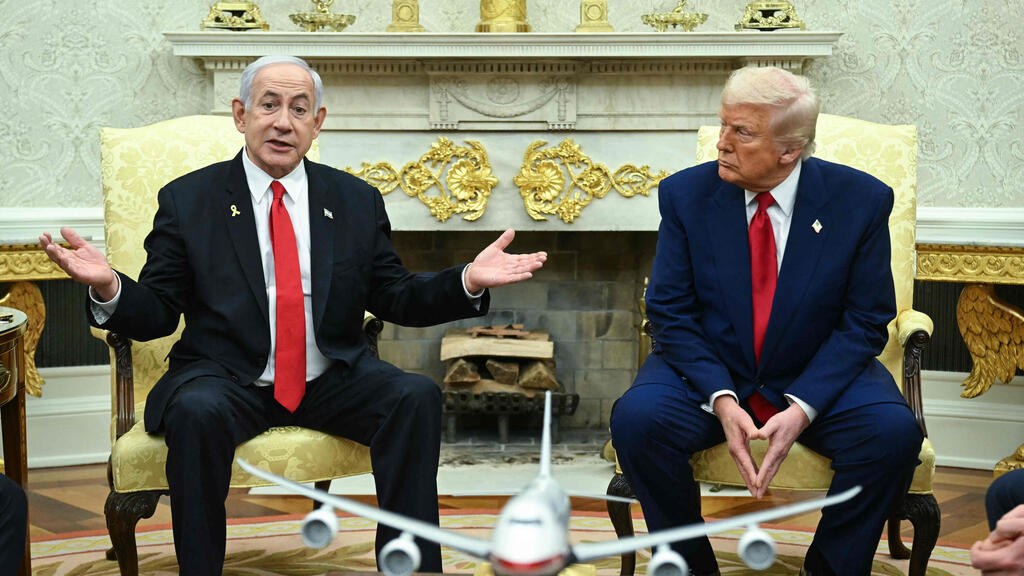
Benjamin Netanyahu and Donald Trump at the White House earlier this year
(Photo: Saul Loeb / AFP)
A key development in the current negotiations is the inclusion of what sources describe as stronger assurances from the United States. A new American clarification, shared with both sides, states that if no final agreement to end the war is reached within 60 days, the ceasefire will still continue as long as negotiations remain serious and ongoing. According to officials close to the talks, this is meant to function as a de facto guarantee that Israel will not resume hostilities unilaterally.
Hamas has responded favorably to the latest language. According to the Saudi newspaper Asharq Al-Awsat , sources close to the group said it was “satisfied” with the revised U.S. assurances and is expected to deliver its formal response before Friday evening. The proposal also tasks President Donald Trump with announcing the deal if accepted, as well as acting as its guarantor and sponsor.
Still, questions remain. Although U.S. officials have signaled commitment, the precise nature of the “guarantees” remains vague, and it is unclear what has changed in Prime Minister Benjamin Netanyahu’s stance that would allow him to commit to a ceasefire that could end the war.
The plan would also see the gradual withdrawal of Israeli forces from Gaza as part of a permanent ceasefire agreement, pending successful negotiations. That provision is expected to be a sticking point for Israel, which has so far demanded that Hamas be fully disarmed, its remaining leadership exiled, and that it play no role in any future civilian governance structure in Gaza.
Meanwhile, preparations are being made on the Israeli side for possible proximity talks, likely in Doha or Cairo. Should Hamas accept the framework, Israel is expected to send a delegation to begin hashing out the details, including which hostages would be released first.
Despite earlier conflicting claims, Israeli officials now confirm that it will be Israel—not Hamas—who determines the list of hostages to be released, with the help of intelligence and medical teams. The initial focus will likely be on hostages in critical condition, either physically or psychologically.
For now, all eyes are on Hamas’ pending response. If the terror group accepts the updated terms, negotiators hope proximity talks can begin within days. While gaps remain, the updated proposal—with its phased implementation, U.S. assurances, and renewed diplomatic momentum—marks the clearest signal yet that a deal may be within reach.
