


[ad_1]
At the end of the day—and to be honest, even at the beginning—some grown-ups revert to being that annoying three-year-old who won’t stop asking: “Why?” And when it comes to driving in the UK, the question feels even more justified. Maybe it’s because of that weekend in London when you nearly didn’t make it back home after forgetting to look right instead of left—or was it left instead of right? (Don’t worry: even people who’ve lived in the UK since the Beatles era still get it wrong sometimes.)
Or maybe it’s because you once rented a car to see something beyond Oxford Street and Big Ben, thinking, “Fine, they drive on the other side here, but the gas and brake pedals are still the same, right?”—only to discover that making a right turn isn't exactly intuitive. And British politeness? It tends to vanish when you hold up traffic or, God forbid, overtake from the wrong side.
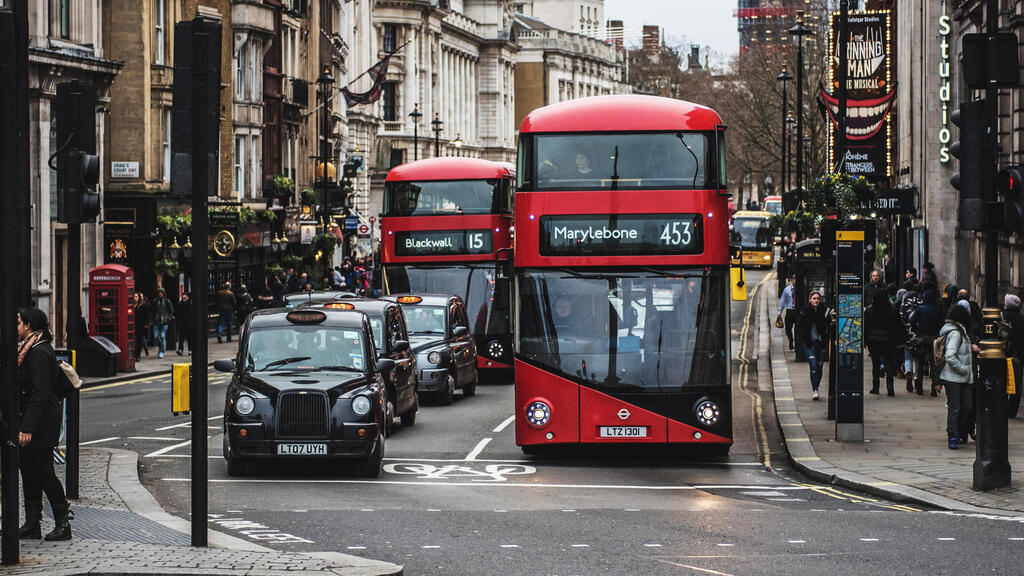
So buckle up and journey back to a time when the most common mode of transport in London was a horse, not one pulling a carriage, but one carrying a man who wouldn’t leave home without his sword. Back then, riders preferred to keep to the left so their right hand—the sword hand—was free, whether to wave in peace or draw a weapon if needed. This tradition, inherited from the Romans who once ruled ancient Britain, was later reinforced by the practicalities of carriage driving: coachmen needed their right hand to control the horses, and keeping left made it easier to navigate oncoming traffic.
The British became even more committed to left-side driving after Napoleon rose to power in France and imposed right-hand traffic there as part of his revolutionary mission to erase class distinctions (between those who walked and those who rode). Britain, in contrast, doubled down on its leftward ways—partly out of sheer opposition. The policy was formalized in 1835 under the Highway Act: drive on the left or face penalties.
Nearly 190 years later, only about 30% of the world’s countries still drive on the left. These include giants like Japan and Thailand, and just three other European nations—Cyprus, Malta, and Ireland—besides the UK (which includes England, Wales, Scotland, Northern Ireland, and various territories). Interestingly, British Mandate rule wasn’t enough to make left-side driving stick in Israel, likely because the preceding Ottoman regime had already established right-hand norms.
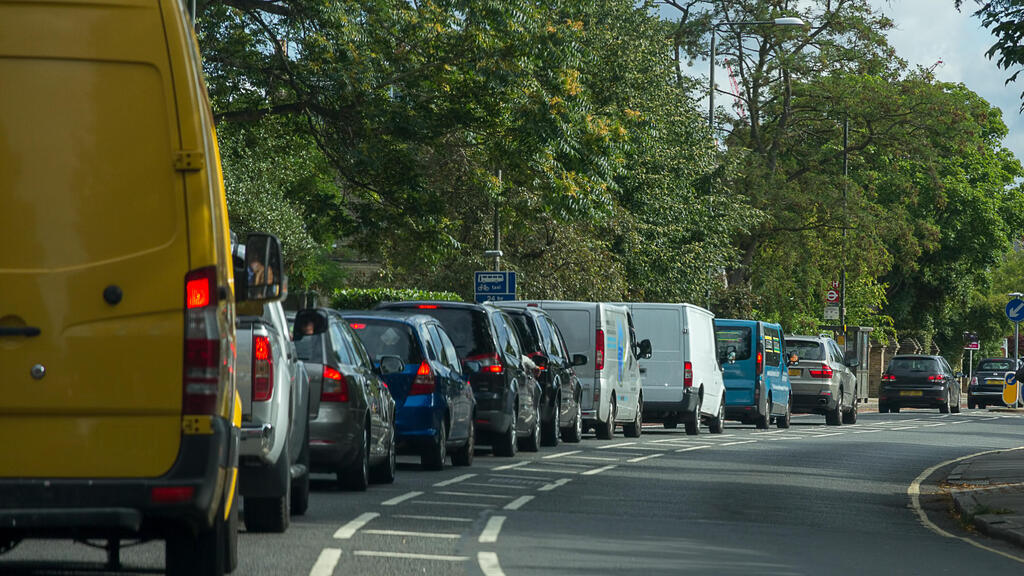
And so, generations of Israeli drivers who mastered every trick of the local traffic jungle arrive in the UK—only to find themselves, once again, rookie drivers.
“You Israelis,” says the local driving instructor, “it’s like you're going to war every time you get in the car.” His name is Wassim—though everyone calls him Waz—and if you’re an Israeli browsing the “Israelis in London” Facebook group, you’ve probably seen his name pop up. UK law allows foreigners with non-recognized licenses (like Israeli ones) to drive for one year. After that, it’s back to the theory test and practical exam. Just like being 17 all over again.
And Waz isn’t wrong: in Israel, getting from Point A to Point B in one piece isn’t taken for granted. That awareness—shaped by stress and the feeling that someone is always trying to cut you off (or worse, if Hamas/Hezbollah/Houthis/whatever decide to launch a missile before you get home)—seeps into every move you make, from road rage to dodging e-scooters. That mentality doesn’t vanish just because you boarded a plane and ended up in a car where the steering wheel and pedals are all on the right.
Once you hit the road in the UK, the first thing you need to do (after buckling up) is stash your ego. The very idea that decades of survival on Israeli roads might be not only irrelevant but potentially dangerous is a tough pill to swallow. Add to that the disorienting sense that everyone else is doing it wrong—and you’re just expected to play along—and it only gets harder.
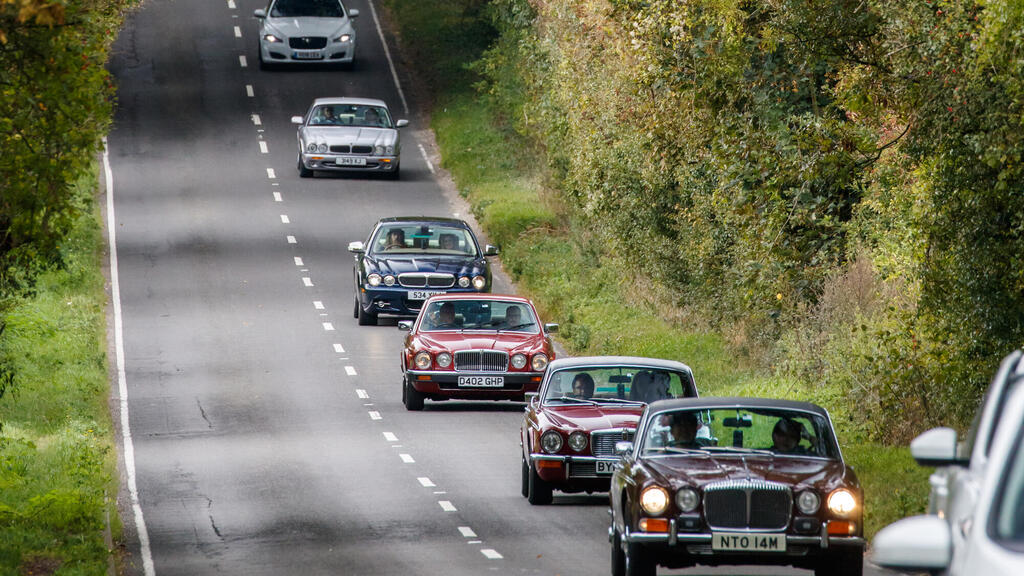
Driving in the UK brings a double culture shock: not only do you have to adapt to turning right and left in reverse, but you must also absorb an entirely different driving culture—from how to enter and exit a roundabout to hugging the center line rather than swerving around parked cars on the side. “Here, there’s a culture of trust,” Waz explains when talking about what examiners expect. Signaling too much or hesitating when you have the right of way may not impress the tester. Try explaining that back home, “culture of trust” is something you’d only say sarcastically—possibly while someone is trying to cut you off in traffic.
Of course, you could decide that this whole “culture of trust” thing is just too much (especially after failing two tests and spending a fortune in pounds), and simply rely on public transportation. London, after all, has a functioning transit system—the kind that might occupy a transportation minister back in Israel if she weren’t too busy setting passport-stamping records. Still, even after years in the UK, it’s sometimes unclear which direction the double-decker bus is coming from—and whether it’s headed toward your destination or the opposite one.
Driving on the left comes with a lingering sense of disorientation, as if every Uber ride plants a seed of doubt that something isn’t quite right. From the driver’s seat position to the way streets shift from one-way to two-way, nothing feels fully intuitive. On longer trips, the dislocation can be so strong that even familiar roads look different the second time around. It’s not just a driving issue—it’s a cultural one.
In 1967, Sweden made the switch from left to right. A few years later, the UK considered a study to explore the cost of doing the same. The result: £264 million—in late-1960s money. Today, that’s roughly £6 billion—and likely a gross underestimate. Even if switching sides would make car manufacturing cheaper, it’s just not worth it. So the odds of Britain ever driving on the right are effectively zero.
And it’s not just about money, bureaucracy, or the enormous headache of retraining tens of millions of drivers. In 2014, ahead of Scotland’s independence referendum, The Guardian ran an April Fool’s spoof claiming that, if Scotland left the UK, it would switch to right-side driving “to strengthen ties with Europe.” The joke, notably, wasn’t that Britain would switch sides—but that a departing country might.
Meanwhile, reality brought Brexit. Five years after the UK left the EU (and nine years after the vote), many Britons now see it as a badly executed prank: in 2016, 52% voted to leave; today, 55% think it was a mistake, according to a YouGov poll. That doesn’t mean nationalist sentiment has faded—support for the monarchy, for instance, remains relatively strong even in the post-Elizabeth era. And odds are, the sentiment around driving hasn’t changed either. There are barely any polls on the issue.
So next time you visit the UK—and likely for all eternity—you’ll still have to rely on those helpful street signs telling you where to look before crossing the road. If you choose to drive, you’ll have to retrain your brain to reach for the radio with your left hand (especially if you're brave enough to drive a manual). Who knows—maybe in the age of flying cars, Britain will finally align with the rest of civilization. But chances are, even when we’re all airborne, someone in the UK will insist they’re still on the “correct” side—and the rest of us will be stuck asking, once again: Why?
[ad_2]
Source link
